Participants in Traffic
In the previous lesson, we discussed who all is a participant in traffic. Now we will look at the main groups: drivers, pedestrians, and cyclists. Each group has its rights and obligations, which the law precisely defines.
Understanding the difference between a driver and a pedestrian, the rights of cyclists, or the obligations of scooter riders is crucial for every future driver.
Explanation
A driver is anyone who operates a motor or non-motor vehicle, including a tram. You become a driver the moment you put the vehicle in motion.
What is considered a 'vehicle':
- Car, motorcycle, bus, truck
- Bicycle (including e-bikes)
- Electric scooter (e-scooter)
- Segway and similar personal transporters
- Tractor, combine harvester
- Tram, trolleybus
What is NOT a vehicle:
- Rollerblades, skateboard
- Non-motorized scooter
- Baby stroller
- Wheelchair
A driver must have the appropriate driving license for the category of the vehicle. An exception is, for example, a bicycle (a child can ride alone on the road from the age of 10) or an e-scooter up to 25 km/h.
A PEDESTRIAN is anyone who moves on the road or sidewalk on foot. A pedestrian also includes:
- A person in a wheelchair
- A person pushing a bicycle, motorcycle up to 50cc, or stroller
- A person on rollerblades or a skateboard
- A person with a baby stroller
Obligations of a pedestrian (Sections 53-54 of the Act):
- Walk on the sidewalk or on the left side of the road (facing oncoming traffic)
- Cross the roadway at designated crossings
- Outside of municipalities at night, wear reflective elements (OBLIGATION, not a recommendation!)
- At the crossing, ensure that it is safe to cross
- Not step in front of an approaching vehicle
Important: A pedestrian has priority at the crossing over vehicles (except trams). However, they must not enter the roadway immediately in front of an approaching vehicle.
A CYCLIST is a driver of a non-motor vehicle (bicycle). They have almost the same rights and obligations as a car driver, but with some exceptions:
Obligations of a cyclist (Sections 57-58):
- Ride at the right edge of the roadway (or in a bike lane if available)
- A helmet is MANDATORY for persons under 18 years old
- Must have reflective reflectors on the bicycle and lights in reduced visibility
- Must not ride on the sidewalk (exception: a child under 10 years old accompanied by an adult)
A child under 10 riding a bicycle alone:
- Must not ride alone on the road
- May ride under the supervision of a person over 15 years old
- From the age of 10, may ride a bicycle on the road independently
Distance when overtaking a cyclist: at least 1.5 meters (in areas with a speed limit of up to 30 km/h, at least 1 meter).
Common mistakes
What to watch out for:
1. "A cyclist can ride on the sidewalk" - NO. A cyclist rides on the road. Only a child under 10 may ride on the sidewalk with supervision.
2. "An e-scooter rider is a pedestrian" - NO. An e-scooter rider is a driver of a vehicle.
3. "A pedestrian must always wear a reflective vest" - NO. Reflective elements are mandatory for pedestrians OUTSIDE OF MUNICIPALITIES in reduced visibility.
4. "A cyclist does not need a helmet" - An adult does not (but it is recommended). However, a person under 18 must wear a helmet.
Explanation
Road Traffic Rules Introduction Road traffic rules in the Czech Republic are not a set of random recommendations. They form a clearly defined system of legal regulations contained in several key laws and implementing regulations. This system ensures road safety and smooth traffic flow by defining the rights and duties of all road users. Basic pillars of the rules (What are they?) Traffic rules are based on three main legal regulations: 1. Act No. 361/2000 Coll., on Road Traffic This is the basic “constitution” for every driver and pedestrian. It regulates fundamental traffic rules (direction of travel, speed, overtaking), driving licences and permits, the penalty points system, and the powers of the Police of the Czech Republic. 2. Act No. 247/2000 Coll., on Acquiring and Improving Professional Competence This act focuses on the technical and training side of driving. It regulates how driving schools operate, how driving tests are conducted, under what conditions a driving licence is obtained, and how professional drivers are trained. 3. Decree No. 294/2015 Coll. This is an implementing regulation to the Road Traffic Act. While the law states that traffic signs must be obeyed, this decree defines in detail what traffic signs and signals look like, where they are placed, and exactly what they mean. How the law works in practice (Hierarchy of rules) The law does not only list rules but also establishes a hierarchy that determines which rule has priority at any given moment. If rules conflict, they are applied in the following order: 1. Instructions of a police officer These have the highest priority and override traffic signs, traffic lights, and general rules. If a police officer signals you to proceed at an intersection, you must go even if the traffic light is red or there is a “Stop, Give Way” sign. 2. Temporary traffic regulation This includes temporary traffic signs, for example at roadworks. These signs are usually placed on red-and-white striped posts and have priority over permanent signs. 3. Local traffic regulation This includes permanent vertical traffic signs and traffic lights. These override road markings (lines on the road surface) and general traffic rules. 4. General traffic regulation These are the rules written directly in the law itself, such as driving on the right-hand side or the general speed limit of 50 km/h in built-up areas. These rules apply whenever they are not modified by a sign or a police officer.
How to remember it
Practical summary:
In practice, you will often encounter situations where you need to quickly recognize which participant in traffic you are dealing with – from that, your obligations follow.
Typical situations:
- A person on an e-scooter in a bike lane = vehicle driver, must follow the same rules as a cyclist
- A person pushing a bicycle across a crossing = pedestrian, has priority at the crossing
- A child on a balance bike on the sidewalk = pedestrian
- A horseback rider on the road = traffic participant, you must pass them carefully
Key principle: When in doubt, behave towards others with maximum caution. Better to brake unnecessarily than to endanger someone.
What the law says
a) účastník provozu na pozemních komunikacích je každý, kdo se přímým způsobem účastní provozu na pozemních komunikacích,
d) řidič je účastník provozu na pozemních komunikacích, který řídí motorové nebo nemotorové vozidlo anebo tramvaj; řidičem je i jezdec na zvířeti nebo osoba, která v automatizovaném vozidle podle přímo použitelného předpisu Evropské unie upravujícího schvalování vozidel z hlediska obecné bezpečnosti55) (dále jen „automatizované vozidlo“) sedí na sedadle řidiče,
j) chodec je i osoba, která tlačí nebo táhne sáňky, dětský kočárek, vozík pro invalidy nebo ruční vozík o celkové šířce nepřevyšující 600 mm, pohybuje se na lyžích, kolečkových bruslích nebo obdobném sportovním vybavení anebo pomocí ručního nebo motorového vozíku pro invalidy, vede jízdní kolo, motocykl o objemu válců do 50 cm3, psa a podobně,
Verbatim text of Act No. 361/2000 Coll., on road traffic, as in force on 1 January 2026. Quoted in Czech — the Czech wording is the binding one.
Check what you remember
Five questions from the official bank. The answer appears only after you choose — try to recall it first, that is what makes learning stick.
-
Question 1 of 5
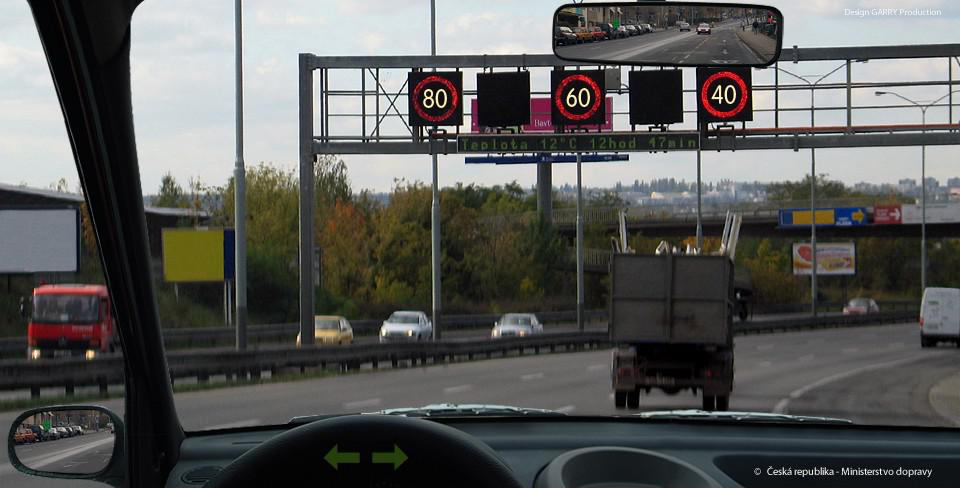
The light indicator above the road shows:
-
Question 2 of 5
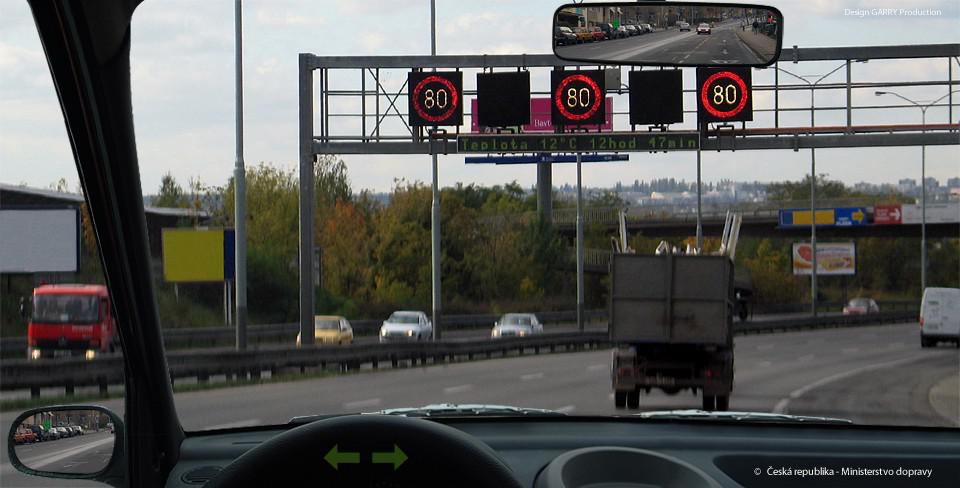
The light indicator above the road shows:
-
Question 3 of 5
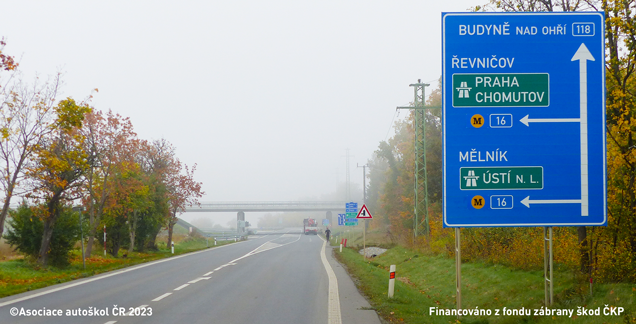
In which direction may a driver of a lorry with a total mass exceeding 3,500 kg travel if they are not registered in the electronic toll system?
-
Question 4 of 5
A driver who swerves from their direction of travel when overtaking a motor vehicle:
-
Question 5 of 5
A driver who was involved in a road traffic accident must:


