Stopping and Parking: Complete Guide
The law distinguishes two terms:
- Stopping (zastavení): Bringing the vehicle to rest for the minimum time needed for passengers to get in/out or for loading/unloading.
- Parking (stání): Any standstill exceeding stopping.
- Stopped by traffic: Red light, congestion, STOP sign (not driver's choice).
General rules
- Stop or park on the right side, in direction of travel, as close as possible to the edge
- On a one-way street (IP4a/4b): left side also permitted
- Normally in one row, parallel to road edge
- In built-up areas: cars up to 3.5 t may park perpendicularly, diagonally, or in a second row if safe
- Taxis: may stop in second row for passenger entry/exit if safe
- Signal beforehand with indicator; open doors safely
- Before leaving vehicle: prevent it from moving
Explanation
Where stopping and parking are PROHIBITED:
- On tram rails or tram lanes; between 5:00–19:00 parking forbidden if less than 3.5 m remains beside nearest tram rail
- On grass or vegetation (unless permitted by local sign)
- Where it would endanger traffic or block other vehicles
- On roundabouts (parking only forbidden)
- On motorways / highways – only in marked areas (emergency: shoulder)
- Outside built-up areas: on Class I roads (and Class II/III in poor visibility) – only in marked places
- On pavements (even if permitted by IP11d–11g: forbidden for vehicles over 3.5 t, tractors, motorised carts)
- On pedestrian crossings and cycle crossings and 5 m before them (§ 27(1)(c)); on a railway crossing and 15 m before and after it (§ 27(1)(g))
- In tunnels, on bridges, in joining/exit lanes
- Less than 30 m before and 5 m after bus/tram stop post
- In reserved lanes (IP20a) or cycle lanes
Lateral clearance distances
| Rule | Distance |
|---|---|
| Min. free lane width when stopping | 3 m (per direction) |
| Near solid line or boarding island | min. 5 m and 3 m free from line |
| Near tram track (05:00–19:00) | min. 3.5 m from nearest rail |
| Near vehicle with O7 disability sign | min. 1.2 m side space |
5-metre rule at intersections
Must not stop or park within 5 m from the intersection boundary. Where road markings exist:
- V5 (solid transverse line) = intersection boundary
- V6a (Give way symbol) = intersection boundary
- V6b (STOP inscription) = both boundary and must-stop point
Local regulation – parking signs and zones
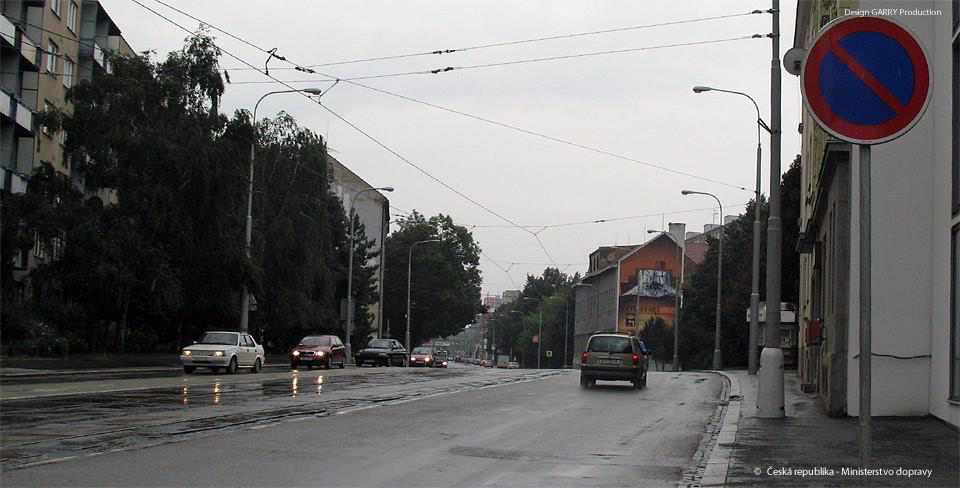
*Prohibitory signs*
Under the sign there may be a supplementary plate (E) indicating the extent:
- ↑ Start of restriction
- ↓ End of restriction
- ↕ Restriction applies both directions from sign
Yellow horizontal road markings on kerb:
- V12c (solid yellow line): no stopping
- V12d (broken yellow line): no parking
*Zone signs (IZ)*
- IZ5a Residential zone (20 km/h)
- IZ6a Pedestrian zone (20 km/h)
- IZ8a Traffic restricted zone (specific rules)
*Parking permission signs (IP 11a–13f)*
Vertical IP signs indicate where stopping and parking is PERMITTED. Horizontal markings V10a–10g specify parking method (parallel/perpendicular/diagonal/time-limited/reserved).
K+R (Kiss & Ride): short stop only for passenger entry/exit. P+R (Park & Ride): long-term parking for public transport interchange.
Exceptions and special privileges
- Disabled vehicle (O7): may in urgent cases ignore no-parking (but not no-stopping), provided traffic is not endangered. May enter supply or pedestrian zones if necessary.
End of IP sign validity
Parking permission sign validity ends 5 m before the nearest intersection, unless extended by road markings or another sign. Entry/exit from private property interrupts validity.
Summary
- Stopping = minimum necessary time; parking = anything longer
- Always park right, close to edge (left also on one-way)
- 5 m from intersection boundary: no stopping or parking
- 30 m before bus/tram stop: no stopping
- Rescue lane: leftmost lane left, all others right
What the law says
(1) Řidič smí zastavit a stát jen
a) vpravo ve směru jízdy co nejblíže k okraji pozemní komunikace a na jednosměrné pozemní komunikaci vpravo i vlevo,
b) v jedné řadě a rovnoběžně s okrajem pozemní komunikace; nedojde-li k ohrožení bezpečnosti a plynulosti silničního provozu, smí v obci řidič vozidla o celkové hmotnosti nepřevyšující 3500 kg zastavit a stát kolmo, popřípadě šikmo k okraji pozemní komunikace nebo zastavit v druhé řadě.
(1) Řidič nesmí zastavit a stát
a) v nepřehledné zatáčce a v její těsné blízkosti,
b) před nepřehledným vrcholem stoupání pozemní komunikace, na něm a za ním,
c) na přechodu pro chodce nebo na přejezdu pro cyklisty a ve vzdálenosti kratší než 5 m před nimi,
d) na křižovatce a ve vzdálenosti kratší než 5 m před hranicí křižovatky a 5 m za ní; tento zákaz neplatí v obci na křižovatce tvaru "T" na protější straně vyúsťující pozemní komunikace,
e) v připojovacím nebo odbočovacím pruhu,
f) u zastávky tramvaje, autobusu nebo trolejbusu bez nástupního ostrůvku v úseku, který začíná dopravní značkou "Zastávka autobusu", "Zastávka tramvaje" nebo "Zastávka trolejbusu" a končí ve vzdálenosti 5 m za označníkem zastávky, a tam, kde taková dopravní značka není, ve vzdálenosti kratší než 30 m před a 5 m za označníkem zastávky, přičemž je-li prostor zastávky vyznačen vodorovnou dopravní značkou "Zastávka autobusu nebo trolejbusu" nebo "Zastávka tramvaje", platí tento zákaz jen pro vyznačený prostor; to neplatí pro řidiče vozidel, k jejichž zastavení nebo stání je zastávka určena,
g) na železničním přejezdu, v podjezdu a v tunelu a ve vzdálenosti kratší než 15 m před nimi a za nimi,
h) v místě, kde by vozidlo zakrývalo svislou dopravní značku nebo vodorovnou dopravní značku "Směrové šipky" nebo "Nápis na vozovce",
i) ve vyhrazeném jízdním pruhu a jízdním pruhu pro cyklisty,
j) v jízdních pruzích vyznačených na vozovce mimo pravého jízdního pruhu,
k) ve vzdálenosti kratší než 5 m od začátku a
Verbatim text of Act No. 361/2000 Coll., on road traffic, as in force on 1 January 2026. Quoted in Czech — the Czech wording is the binding one.
Check what you remember
Five questions from the official bank. The answer appears only after you choose — try to recall it first, that is what makes learning stick.
-
Question 1 of 5
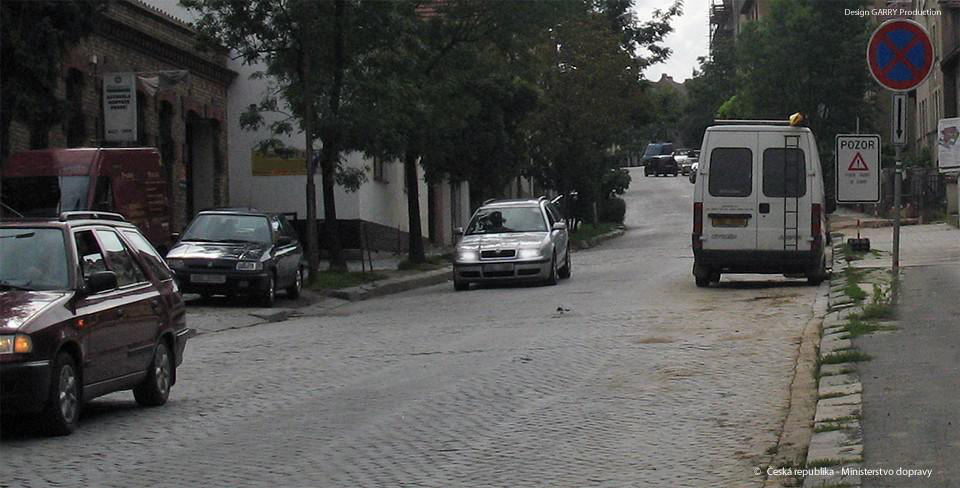
Can stopping be made before the nearest traffic sign for the purpose of immediate unloading of goods?
-
Question 2 of 5
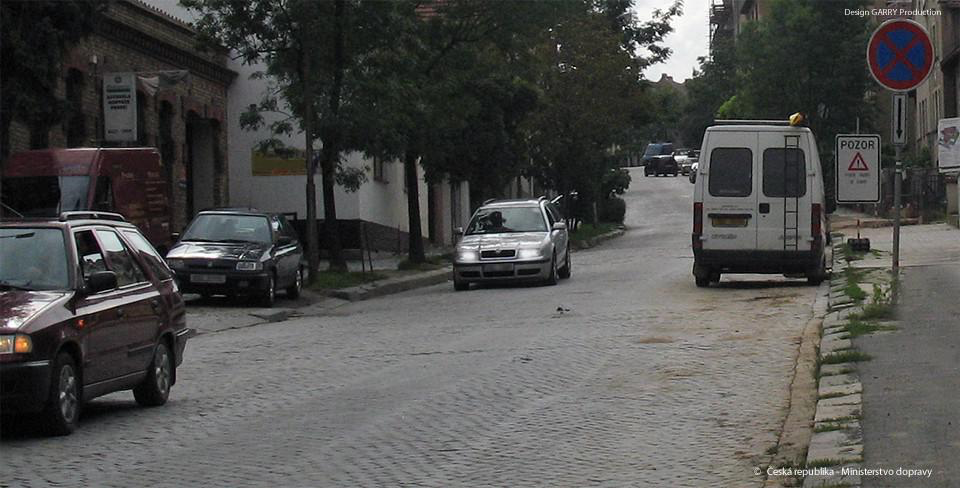
Is it permitted to stop behind the nearest traffic sign for the immediate disembarkation of passengers?
-
Question 3 of 5
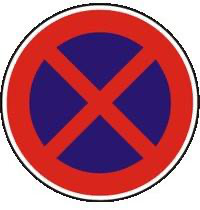
Select the correct meaning of the sign:
-
Question 4 of 5
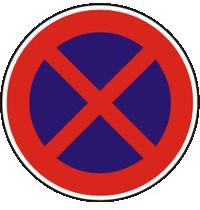
This traffic sign:
-
Question 5 of 5
What does this traffic sign mean for a motor vehicle driver?