Driving in Lanes
Proper driving in a lane is the foundation of safe driving. Sections 11 and 12 of Act 361/2000 Coll. specify where on the roadway you should drive, when you can change lanes, and how to behave on multi-lane roads.
Most drivers typically drive in the right lane. The left lane is designated for overtaking, turning left, or when the right lane is occupied.
Explanation
Basic Rule: Drive on the Right (Section 11)
Drive as far to the right as possible. This applies to:
- On a two-lane road: you drive in the right lane.
- On a road with three or more lanes in one direction: you drive as far to the right as possible.
- On a road without marked lanes: you drive at the right edge.
You only use the left lane when you have a reason:
- You are overtaking.
- You are turning left.
- You are bypassing an obstacle.
- In a municipality, you can also drive in the left lane if you do not slow down vehicles behind you that cannot otherwise overtake you.
Important: After overtaking, always return to the right lane. Long driving in the left lane without reason is an offense.
Lane Change (Section 12)
When changing lanes, the following applies:
1. A driver changing lanes must not ENDANGER or RESTRICT the driver in the lane they are merging into. 2. Before changing lanes, you must:
- Turn on your turn signal
- Check the rearview mirror
- Check the blind spot
- Verify that there is enough space
3. On a multi-lane road in heavy traffic, the so-called lane driving applies:
- Drivers drive in all lanes side by side.
- When merging lanes (for example, when one lane ends), vehicles alternate one by one: zipper system.
Fine for changing lanes without signaling: 1,500 - 2,500 CZK, 2 points.
Example
Example - Three-Lane Highway:
You are driving in the right lane of the highway (maximum 130 km/h). A truck is driving in front of you at 80 km/h.
1. You look in the rearview mirror - the left lane is free. 2. You check over your left shoulder (blind spot) - no one is there. 3. Turn on your left turn signal. 4. Smoothly move into the left (middle) lane. 5. Overtake the truck. 6. Turn on your right turn signal. 7. Check the right side. 8. Return to the right lane.
MOST COMMON MISTAKE: The driver does not return to the right lane after overtaking and stays in the left lane. This is wrong and punishable!
Common mistakes
Typical Mistakes:
1. "I must drive in the right lane even in the city - NO, in the city you can use any lane, including the left, as long as you do not slow down the drivers behind you."
2. "I don't have to turn on my turn signal when changing lanes" - YOU MUST! Always signal a lane change.
3. "The zipper system is just a recommendation" - NO. It is a legally mandated obligation (Section 12, paragraph 4).
4. "I don't have to check the blind spot if I have mirrors" - YOU MUST! Mirrors do not cover the entire area beside the vehicle.
Explanation
Road Traffic Rules Drive -lanes, overtaking I. Rules for Driving in Lanes and for overtaking 1. Lane Use and Parallel Driving Outside municipality: • Drivers must normally use the right-hand lane. • Other lanes are used only for overtaking, turning, driving around an obstacle, or turning around. Inside municipality: • Drivers of motor vehicles may use any lane (parallel driving). • If vehicles in all lanes block a faster vehicle from behind, the driver in the leftmost lane must move aside as soon as possible. Vehicles over 3,500 kg, longer than 7 m, special vehicles (tractors) and vehicles with max speed 45 Km/h: • In municipality, they may use the left lane only when needed for: ◦ overtaking, ◦ driving around obstacles, ◦ turning, ◦ turning around. • On roads with three or more lanes in one direction, such vehicles may use only the two lanes closest to the right edge of the road. Zipper Merge • When changing lanes, a driver must not endanger or restrict drivers in the lane they are entering. • When a lane ends, drivers in the through lane must allow vehicles from the ending lane to merge alternately, one by one. 2. Overtaking I. Basic rules and direction of overtaking • Overtaking is normally done on the left. • Overtaking on the right is allowed only in two specific cases: You may overtake on the right if the vehicle ahead is clearly turning left. If you are driving in an joining (slip lane, onramp) or exit lane, you may overtake a vehicle driving in the through-lane. Overtaking is not: • situations of parallel driving vehicles inside municipality, when vehicle in one lane is travelling at a different speed than other vehicles in the same direction • situations of parallel driving, when a tram, bus or a vehicle using a reserved lane is travelling at a different speed than other vehicles moving in the same direction II. General prohibitions on overtaking A driver must not overtake when: • Safe re-entry is not guaranteed - If you cannot safely return to your lane in front of the overtaken vehicle(s). • You would endanger or restrict oncoming traffic - You must not force an oncoming driver to brake or evade. • At a pedestrian crossing , cycle crossing and railroad crossing (and immediately before them) - Strictly prohibited. • Vehicle ahead signals a left turn - If the vehicle in front indicates left and you cannot overtake on the right (according to section I.2), overtaking is forbidden.
- Vehicle turning left
- In an joining or exit lane
How to remember it
Practical Summary:
Driving in Lanes – What to Do and Not Do:
- Outside of a municipality: ALWAYS drive in the right lane. The left is only for overtaking.
- In a municipality: You can drive in any lane (but you must not unnecessarily slow down other drivers).
- Before changing lanes: turn signal → side mirror → blind spot (turning your head) → merge.
- After overtaking, ALWAYS return to the right lane.
Most common offense: Driving in the left lane without reason outside of a municipality – it restricts other drivers and you may receive a fine.
Practical tip on the highway: If someone is overtaking you on the right, you are in the wrong lane. Move to the right.
What the law says
(1) Mimo obec se na pozemní komunikaci o dvou nebo více jízdních pruzích vyznačených na vozovce v jednom směru jízdy jezdí v pravém jízdním pruhu. V ostatních jízdních pruzích se smí jet, jestliže je to nutné k objíždění, předjíždění, otáčení nebo odbočování.
(2) V obci na pozemní komunikaci o dvou nebo více jízdních pruzích vyznačených na vozovce v jednom směru jízdy smí řidič motorového vozidla užívat k jízdě kteréhokoliv jízdního pruhu; přitom se nepovažuje za předjíždění, jedou-li vozidla v jednom z jízdních pruhů rychleji než vozidla v jiném jízdním pruhu. Pokud by vozidla jedoucí současně ve všech jízdních pruzích bránila v jízdě rychleji jedoucímu vozidlu, musí řidič jedoucí v levém krajním jízdním pruhu tento pruh co nejdříve uvolnit; to neplatí, užívá-li řidič levého krajního jízdního pruhu k odbočování, otáčení nebo při souběžné jízdě podle odstavce 3. Řidič nákladního automobilu o celkové hmotnosti převyšující 3 500 kg, jízdní soupravy, jejíž celková délka přesahuje 7 m, zvláštního motorového vozidla, motocyklu s konstrukční rychlostí do 45 km.h-1 a cyklista smí levý krajní jízdní pruh užít k jízdě, jen jestliže je to nutné k objíždění, předjíždění, otáčení nebo odbočování.
(5) Přejíždět z jednoho jízdního pruhu do druhého smí řidič jen tehdy, neohrozí-li a neomezí-li řidiče jedoucího v jízdním pruhu, do kterého přejíždí; přitom musí dávat znamení o změně směru jízdy. Při souběžné jízdě umožní řidiči vozidel jedoucích v průběžném pruhu řidičům vozidel do tohoto pruhu přejíždějících z pruhu, který přestal být průběžným, vjet tak, aby se vozidla jedoucí v průběžném pruhu a vozidla do něho přejíždějící mohla řadit střídavě po jednom do jízdního proudu průběžného pruhu. Tam, kde se dva jízdní pruhy sbíhají v jeden, aniž by bylo zřejmé, který z nich je průběžný, nesmí řidič jedoucí v levém jízdním pruhu ohrozit řidiče jedoucího v pravém jízdním pruhu.
Verbatim text of Act No. 361/2000 Coll., on road traffic, as in force on 1 January 2026. Quoted in Czech — the Czech wording is the binding one.
Check what you remember
Five questions from the official bank. The answer appears only after you choose — try to recall it first, that is what makes learning stick.
-
Question 1 of 5
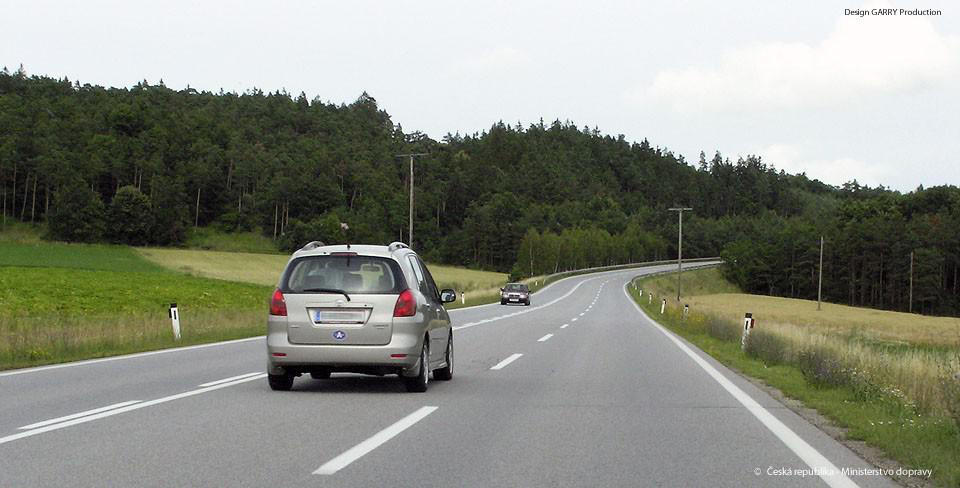
Outside built-up areas, on a road with two or more lanes in one direction of travel, vehicles travel:
§ 12
-
Question 2 of 5
A driver may only change from one lane to another if:
§ 12
-
Question 3 of 5
Outside built-up areas, on a road with two or more lanes marked on the carriageway in one direction of travel, vehicles travel:
§ 12
-
Question 4 of 5
In a built-up area, on a road with two or more lanes marked on the carriageway in one direction of travel, a motor vehicle driver may use:
§ 12
-
Question 5 of 5
On a road with three lanes marked on the carriageway in one direction of travel, a driver may change from the left lane to the middle lane only:
§ 12
