Horizontal Markings: Lines and Arrows
Horizontal traffic markings (lines on the road) are as important as vertical signs. Decree 294/2015 Coll. defines various types of lines, arrows, and symbols on the roadway. Correct understanding of horizontal markings is crucial for safe driving.
Horizontal markings are divided into: longitudinal lines, transverse lines, arrows, and symbols.
Explanation
LONGITUDINAL LINES (center and edge):
1. SOLID LINE (continuous) = PROHIBITION of crossing
- You must not cross it or drive on it, except when bypassing obstacles, turning to a place off the road (purposeful road), or overtaking cyclists
- Usually indicates the boundary between lanes going in opposite directions
- DOUBLE solid = absolute prohibition, only bypassing obstacles
2. BROKEN LINE = crossing ALLOWED
- Short dashes with gaps
- You can cross when overtaking or turning
3. COMBINED (solid + broken side by side):
- Only the one on the SIDE of the BROKEN line may cross
- The one on the side of the solid line may NOT cross
4. GUIDING LINE (edge):
- Separates the driving lane from the shoulder
- Helps orientation especially at night and in rain
5. YELLOW LINE at the edge:
- Solid yellow = prohibition of stopping
- Broken yellow = prohibition of parking
TRANSVERSE LINES, ARROWS, AND SYMBOLS:
TRANSVERSE LINES:
- Continuous transverse line (STOP line) = you MUST STOP
- Broken transverse line = place where you yield
- Pedestrian crossing = wide white stripes ('zebra')
- Bicycle crossing
ARROWS ON THE ROAD:
- Directional arrows = indicate the allowed direction of travel in the lane
- Preliminary arrows = warn of the need to change lanes
- Merging lanes = arrows in lanes before the intersection
IMPORTANT: If you are in a lane with a STRAIGHT arrow, you MUST NOT turn in that lane!
SYMBOLS ON THE ROAD:
- P on the road = parking
- BUS = reserved lane for buses
- Bicycle = bike lane
- 30, 50 = reminder of the speed limit
Example
Example - reading horizontal markings:
1. You are driving on a two-lane road, there is a SOLID line in the middle: You cannot cross into the opposite direction = no overtaking.
2. You see a COMBINED line (solid on the left, broken on the right): You are on the side of the broken line = YOU MAY cross (overtake). The opposite direction has a solid line = THEY cannot.
3. Before the intersection, you see arrows in the lanes: the left lane has an arrow LEFT, the right lane has an arrow STRAIGHT. If you want to go straight, merge into the RIGHT lane.
4. You approach a STOP line (solid transverse line + STOP sign): YOU MUST stop before the line. The car must come to a complete stop. Then look around and proceed.
Common mistakes
Common mistakes:
1. "I can always cross a broken line" - YES, but you must not ENDANGER or RESTRICT oncoming traffic. A broken line allows crossing, but you must have sufficient visibility.
2. "I can cross a combined line from both sides" - NO! Only from the side of the broken line.
3. "Arrows on the road are just recommendations" - NO! Arrows in merging lanes are MANDATORY - you must go in the direction indicated by the arrow.
4. "STOP line = just slow down" - NO! At a STOP line, you must COME TO A COMPLETE STOP.
Explanation
Road Traffic Rules Traffic signs - horizontal Longitudinal lines
Transverse lines V 1a Single continuous line The sign is used in particular to separate lanes with oncoming traffic, to separate part of the shift lanes and to separate part of the turning or connecting lane from the through lane. If a sign is used to separate lanes with oncoming traffic, the driver must drive to the right of the sign. It is forbidden to drive over the sign or over it with a load, unless necessary to get around it obstacle, overtaking a cyclist, turning onto an off-road space or entering a road from an off-road space. V 1b Double continuous line The sign is used to separate opposing lanes on a roadway with more than two lanes. The sign may also be used on a dual carriageway where justified. The driver is obliged to keep to the right of this sign. It is forbidden to drive over the sign or over it with a load, unless necessary to get around obstacle. V 2a Dotted line The sign is used to mark and separate lanes. It is used to separate opposing lanes on sections where there is sufficient visibility for overtaking and where there is no area requiring special attention. The sign may be crossed if the relevant provisions of the general road traffic regulations are complied with. The mark is made with spaces twice the length of the segments. V 2b Dotted line The sign is used to mark and separate lanes in a section where the dotted line becomes a continuous line or to indicate a place requiring special attention (a bend, intersection, etc.). The sign may be crossed if the relevant provisions of the general road traffic regulations are complied with. The sign is made with spaces of equal or half the length of the segments. V 2c Double longitudinal dotted line The sign indicates a lane used alternately for one direction of travel and the other. If the lane is not so used, the sign shall have the same meaning as a longitudinal dashed line. V 3 A continuous line supplemented by a dotted line If this sign separates lanes with oncoming traffic, only the right-hand line of this pair of lines has meaning for the driver. If this sign indicates lanes in one direction of travel, the meaning of the line closer to the driver applies. V 4 Guide line The sign indicates the edge of the roadway. V 5 Continuous transverse line The sign indicates the boundary of the intersection. It can be used to mark the stopping place of a vehicle in the intersection area. V 6a Transverse continuous line with the symbol "Yield right of way!" The sign indicates the boundary of the intersection. It can be used to mark the stopping place of a vehicle in the intersection area.
Road Traffic Rules Traffic signs - horizontal Arrows V 6b Transverse continuous line with the inscription STOP The sign marks the boundary of the intersection. The sign indicates the place where the driver is obliged to stop the vehicle at the command of the sign "Stop, give way!".
How to remember it
Practical summary:
Horizontal markings – quick rule:
- SOLID line = WALL (unless explicitly allowed, do not cross, as if there were a wall)
- BROKEN line = GATE (you may cross if it is safe)
- COMBINED (solid + broken side by side) = Cross only from the side of the broken line
Transverse lines:
- Solid transverse line (STOP line) = YOU MUST come to a complete stop
- Broken transverse line = Yield (stop only if necessary)
Arrows on the road:
- Merging arrows = You must go in the direction of the arrow
- Preliminary arrows = Warning of an upcoming lane change
Practical tip:
- With a combined line, always watch from which side you are coming.
- If you have a broken line, you may cross (if it is safe).
- If you have a solid line, you must not cross – even if the opposite direction has a broken line.
What the law says
(1) Rozlišují se dopravní značky svislé a vodorovné.
(1) Místní úprava provozu na pozemních komunikacích je nadřazená obecné úpravě provozu na pozemních komunikacích. Přechodná úprava provozu na pozemních komunikacích je nadřazena místní i obecné úpravě provozu na pozemních komunikacích.
Verbatim text of Act No. 361/2000 Coll., on road traffic, as in force on 1 January 2026. Quoted in Czech — the Czech wording is the binding one.
Check what you remember
Five questions from the official bank. The answer appears only after you choose — try to recall it first, that is what makes learning stick.
-
Question 1 of 5
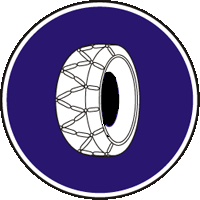
This traffic sign:
-
Question 2 of 5
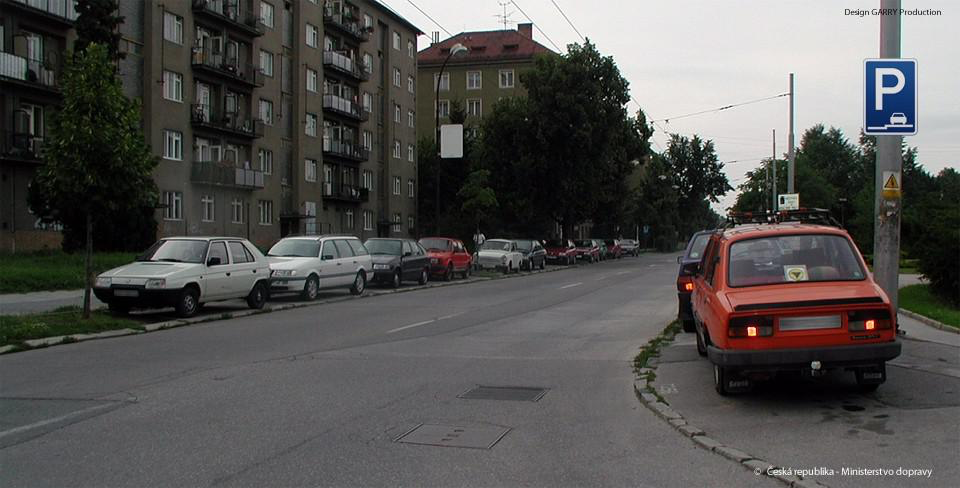
What does this traffic sign mean?
-
Question 3 of 5
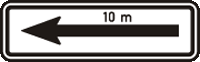
Which of the supplementary plates shown indicates the direction to the place to which the traffic sign under which this plate is placed relates:
-
Question 4 of 5
The "One-Way Traffic" traffic sign defines a section of road where it is prohibited to:
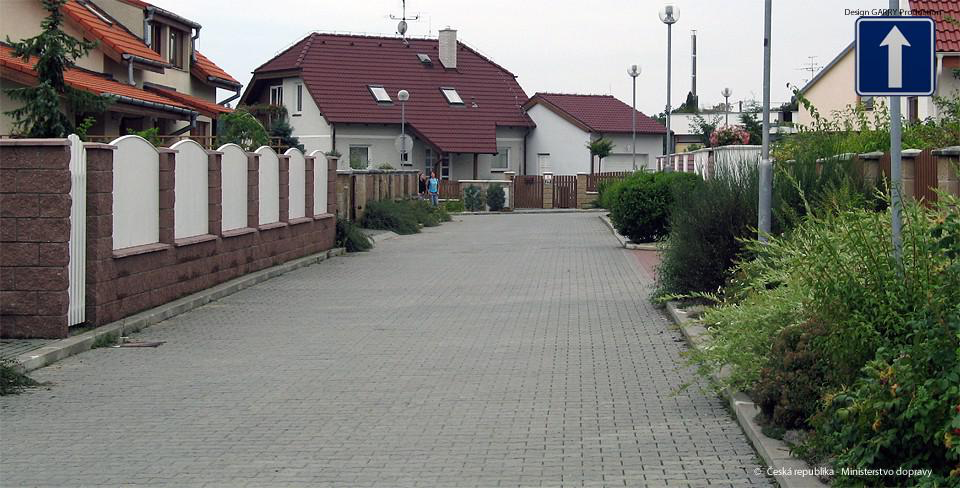
-
Question 5 of 5
Which of the traffic signs shown marks a main road: