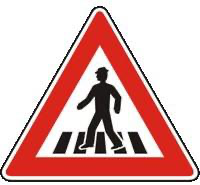
Traffic Signs: How to Read Them
Traffic signs are the 'language of the road'. Regulation 294/2015 Coll. defines over 200 different signs. It is crucial for drivers to understand their meaning, shape, and color.
We can divide them into four main categories: warning, prohibitory, mandatory, and informative.
Explanation
WARNING SIGNS (A):
- SHAPE: triangle with the top pointing up
- COLOR: white background, red border, black symbol
- PURPOSE: warn of DANGER
The most important warning signs:
- A1a Right/Left Turn
- A2a/b Double Turn
- A4 Intersection (with side road)
- A6a/b Transverse Threshold, Speed Bump
- A7a Railway Crossing with Barriers
- A7b Railway Crossing without Barriers
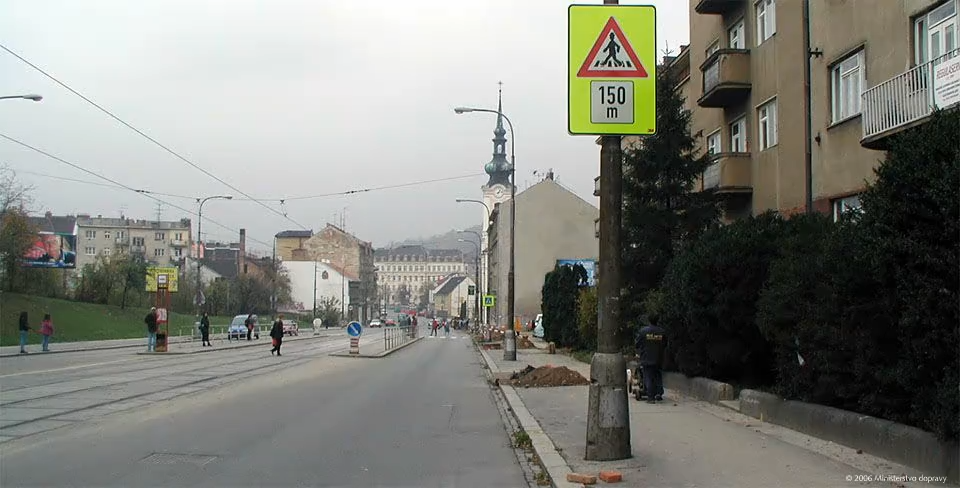
- A9 Pedestrian Crossing
- A10 Children
- A11 Animals
- A12 Road Work
- A15 Slippery Road
- A22 Other Danger (exclamation mark)
Warning signs are placed 50-200 m before the dangerous spot in urban areas, 150-400 m outside urban areas.
PROHIBITORY SIGNS (B):
- SHAPE: circular
- COLOR: white background, red border, black symbol
- PURPOSE: PROHIBIT certain behavior
The most important prohibitory signs:
- B1 Prohibition of Entry for All Vehicles
- B2 Prohibition of Entry (one-way street - red circle)
- B4 Prohibition of Overtaking
- B11a Prohibition of Entry for Trucks
- B20a Maximum Allowed Speed (red circle with number)
- B28 Prohibition of Stopping (red circle, blue background, red X)
- B29 Prohibition of Parking (red circle, blue background, red diagonal stripe)
END OF PROHIBITION:
- Specific sign (e.g., B20b end of speed limit)
- Sign 'End of All Prohibitions' (B26, white circle with diagonal stripes)
- Intersection (cancels most prohibitions, except for exceptions)
- Beginning/end of municipality
MANDATORY SIGNS (C) and INFORMATIVE SIGNS (I):
MANDATORY SIGNS (C):
- SHAPE: circular
- COLOR: blue background, white symbol
- PURPOSE: MANDATE certain behavior
- Examples: C1 Direction of Travel, C2 Mandatory Direction, C4a Roundabout
INFORMATIVE SIGNS (I):
- SHAPE: rectangular or square
- COLOR: blue, green, or white background
- PURPOSE: INFORM about places, directions, facilities
Important informative signs:
- IP4 One-Way Street (blue rectangle with white arrow)
- IP6 Pedestrian Crossing
- IP10a Dead End
- IP11 Allowed Parking Method
- IP13a Residential Zone
- IP25a Speed Limit Zone (30)
- IS1-IS6 Directional Signs (green = highway, blue = expressway, white = others)
Common mistakes
Common Mistakes:
1. "A warning sign prohibits something" - NO! A warning sign only WARNS. Prohibitions are indicated by prohibitory signs (red circle).
2. "The maximum speed applies until the next intersection" - CORRECT! But beware: a roundabout is an intersection, so the prohibition is canceled.
3. "A blue round sign prohibits" - NO! A blue round sign MANDATES (mandatory). Prohibitory signs are white with a red border.
4. "Prohibition of Stopping (B28) and Prohibition of Parking (B29) are the same" - NO! B28 (X) = you must not even stop. B29 (one stripe) = you must not park, but you MAY stop briefly.
Explanation
Road Traffic Rules Traffic signs - introduction General Classification of Traffic Signs Traffic signs are primarily classified into two main types: 1. Vertical Traffic Signs (Svislé dopravní značky): These signs are permanently affixed to posts, buildings, or other structures fixed to the ground. Variable traffic signs (proměnné dopravní značky) also fall under vertical signs, and their appearance can change; their coloring may differ, typically featuring dark backgrounds with light lettering, symbols, and borders. 2. Horizontal Traffic Signs (Vodorovné dopravní značky): These are marked on the road or other paved part of the road. They are used alone or in conjunction with vertical signs, whose meaning they emphasize or specify. Temporary horizontal signs are often yellow or orange. 2. Categories of Vertical Traffic Signs Vertical traffic signs are divided into the following categories: Categories of Horizontal Traffic Signs Horizontal traffic signs are divided into the following categories: • Longitudinal Lines (Podélné čáry): Used primarily to separate lanes traveling in the same or opposite directions (e.g., solid line V 1a, double solid line V 1b, dashed line V 2a). • Transverse Lines (Příčné čáry): Used to mark intersection boundaries, stopping points, pedestrian crossings, or cyclist crossings (e.g., solid transverse line V 5, solid transverse line with STOP inscription V 6b). • Arrows (Šipky): Used to mark lane configuration before an intersection or mandatory directions (e.g., directional arrows V 9a, preliminary arrows V 9b/c). • Marking of Parking and Standing (Označení stání a parkovišť): Used to delineate permissible stopping and standing areas, often specifying the manner of parking (e.g., parallel, perpendicular, oblique parking, or reserved parking V 10e). • Marking of Stops and Prohibitions of Stopping and Standing. • Other Horizontal Traffic Signs (Ostatní vodorovné dopravní značky): This includes signs such as zigzag white lines (V 12e) to warn of increased caution, parallel oblique lines (V 13) indicating areas where entry is prohibited, cycle lanes (V 14), inscriptions on the road (V 15), or safe distance markings (V 16). Category Purpose Examples and Details Warning Signs To alert traffic participants to dangerous places where increased caution is required. They typically warn of hazards like curves, intersections without priority regulation, dangerous slopes, narrowing roads, or hazards related to pedestrians, children, or animals. Signs Regulating Priorities To establish priority in traffic. Examples include "Main Road" (P 2), "End of Main Road" (P 3), "Give Way" (P 4), and "Stop, Give Way" (P 6). Prohibitory Signs To impose prohibitions or restrictions on traffic participants. Examples include prohibitions on entry for all vehicles (B 1, B 2), speed limits (B 20a), or restrictions on stopping and standing (B 28, B 29). Mandatory Signs To impose specific commands or requirements on traffic participants.
How to remember it
Practical Summary:
Traffic Signs – How to Remember Them:
You can recognize them by their shape and color:
- TRIANGLE with a red border = WARNING (caution, danger is present)
- CIRCLE with a red border = PROHIBITION (this is not allowed)
- BLUE CIRCLE = MANDATORY (this is required)
- SQUARE/rectangular blue = INFORMATION (orientation, assistance)
- SIGN below the main sign = clarification (e.g., distance, validity)
How signs apply:
- A prohibitory sign is valid until the nearest intersection (unless there is a sign below indicating duration)
- The sign "End of Prohibition" cancels all prohibitions at once
- A traffic sign on a red and white pole = TEMPORARY (takes precedence over permanent)
Tip for the exam: If you are unsure whether a sign is prohibitory or warning, look at the shape. Triangle = warning, circle = prohibition or mandate.
What the law says
(1) Rozlišují se dopravní značky svislé a vodorovné.
(1) Svislé dopravní značky jsou
a) výstražné značky, které upozorňují na místa, kde účastníku provozu na pozemních komunikacích hrozí nebezpečí a kde musí dbát zvýšené opatrnosti,
b) značky upravující přednost, které stanoví přednost v jízdě v provozu na pozemních komunikacích,
c) zákazové značky, které ukládají účastníku provozu na pozemních komunikacích zákazy nebo omezení,
d) příkazové značky, které ukládají účastníku provozu na pozemních komunikacích příkazy,
e) informativní značky, které poskytují účastníku provozu na pozemních komunikacích nutné informace, slouží k jeho orientaci nebo mu ukládají povinnosti stanovené tímto zákonem nebo zvláštním právním předpisem,23)
f) dodatkové tabulky, které zpřesňují, doplňují nebo omezují význam dopravní značky, pod kterou jsou umístěny.
(1) Místní úprava provozu na pozemních komunikacích je nadřazená obecné úpravě provozu na pozemních komunikacích. Přechodná úprava provozu na pozemních komunikacích je nadřazena místní i obecné úpravě provozu na pozemních komunikacích.
Verbatim text of Act No. 361/2000 Coll., on road traffic, as in force on 1 January 2026. Quoted in Czech — the Czech wording is the binding one.
Check what you remember
Five questions from the official bank. The answer appears only after you choose — try to recall it first, that is what makes learning stick.
-
Question 1 of 5
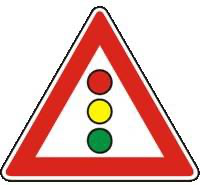
This traffic sign:
-
Question 2 of 5
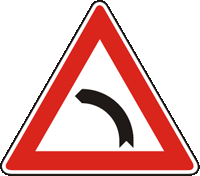
Select the traffic sign that warns the driver of a place where road traffic is controlled by light signals which the driver would not otherwise expect, or which are not visible from a sufficient distance due to local conditions:
-
Question 3 of 5
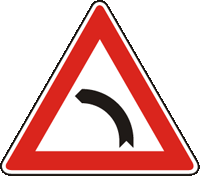
Select the traffic sign that warns the driver of a place where road traffic is controlled by light signals which the driver would not otherwise expect, or which are not visible from a sufficient distance due to local conditions:
-
Question 4 of 5
In the situation shown in the picture, the driver must take into account that:
-
Question 5 of 5
This traffic sign: