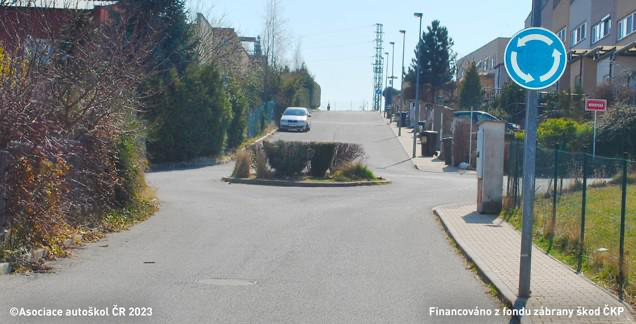
Intersections: Complete Guide
An intersection is a place where roads cross or join. Important: exits from field roads, forest roads or purpose roads are NOT considered intersections – when entering from such places, always give way to all vehicles on the road.
A driver must not enter an intersection if traffic conditions would force them to stop inside it.
Exceptions (stopping inside intersection permitted):
- Stopping to allow pedestrians to cross
- Waiting inside when turning left and giving way to oncoming traffic
Hierarchy of traffic control (highest priority first):
1. Police officer / authorised person instructions 2. Traffic lights 3. Temporary traffic regulation (portable signs) 4. Permanent traffic signs / lights 5. General traffic rules (law)
Explanation
General rule – right-hand priority
At intersections without lights or signs: give way to vehicles approaching from the right. Also applies to:
- Organised groups of pedestrians
- Handlers of driven animals
Turning rules (general regulation)
*Turning left:* Give way to:
- Oncoming vehicles (motorised and non-motorised)
- Riders on animals
- Trams in both directions !!!
- Cyclists in cycle lane
- Buses in bus lane
Oncoming vehicles both turning left pass each other on the left (left side to left side).
*Turning right:* Give way to:
- Vehicles in reserved lanes (bus, taxi)
- Cyclists in cycle lane
- Tram if passing on left is permitted
Local regulation – main and side roads
Main road: P1 (outside built-up area) or P2 (inside). Side road: P4 (Give way) or P6 (Stop, give way).
Driver on the side road must give way to everything on the main road.
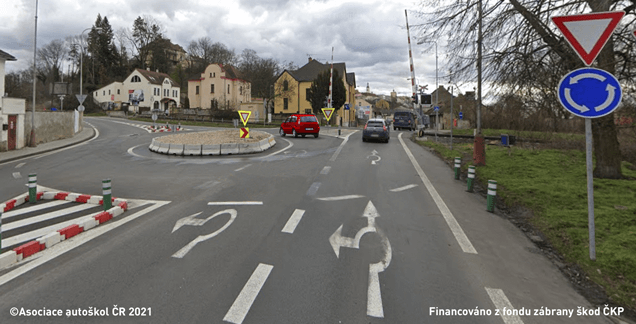
Roundabout
Marked C1. With P4 or P6: entering vehicles give way to circulating traffic. With P2 or traffic lights: priority is reversed – follow the specific sign/signal.
Traffic lights
Traffic lights override priority signs (P1, P2, P4, etc.)!
*Green (S1c):*
- May proceed, but turning rules still apply
- Turning left: give way to oncoming traffic, trams from both directions, pedestrians and cyclists
- Turning right: give way to cyclists, pedestrians, trams
*Green arrow (S2c/S3c):*
- May drive in arrow direction only
- Green arrow left = no need to give way to oncoming traffic
*Supplementary green arrow (S5):*
- Lit together with red or yellow
- Drive in arrow direction only, but must give way to other directions
- Must not endanger pedestrians or cyclists
*Red (S1a):* Stop before the stop line. *Yellow (S1b):* Stop; if safe stopping is no longer possible, continue. *Red + Yellow:* Prepare to move. *Flashing yellow (S7):* Intersection not controlled by lights – general rules apply.
Police officer
Police officer instructions have the highest priority.
- Officer facing you or with back to you = STOP
- Officer sideways = GO (straight or turn, following turning rules)
- Right arm forward + left arm sideways = three-direction control
Summary
- Hierarchy: police > lights > temp.signs > permanent signs > law
- Right-hand priority = general rule without signs
- Trams have right of way when turning left – both directions
- Green light does NOT give unconditional right of way
- Roundabout with P4 = yield to circulating traffic
What the law says
(1) Řidič přijíždějící na křižovatku po vedlejší pozemní komunikaci označené dopravní značkou "Dej přednost v jízdě!" nebo "Stůj, dej přednost v jízdě!" musí dát přednost v jízdě vozidlům nebo jezdcům na zvířatech přijíždějícím po hlavní pozemní komunikaci nebo organizované skupině chodců nebo průvodcům hnaných zvířat se zvířaty přicházejícím po hlavní pozemní komunikaci.
(2) Nevyplývá-li přednost v jízdě z ustanovení odstavce 1, musí dát řidič přednost v jízdě vozidlům nebo jezdcům na zvířatech přijíždějícím zprava nebo organizované skupině chodců nebo průvodcům hnaných zvířat se zvířaty přicházejícím zprava.
(5) Řidič odbočující vlevo musí dát přednost v jízdě protijedoucím motorovým i nemotorovým vozidlům, jezdcům na zvířeti, protijdoucím organizovaným útvarům chodců a průvodcům hnaných zvířat se zvířaty, tramvajím jedoucím v obou směrech a vozidlům jedoucím ve vyhrazeném jízdním pruhu, pro něž je tento jízdní pruh vyhrazen, a cyklistům jedoucím v jízdním pruhu pro cyklisty.
Verbatim text of Act No. 361/2000 Coll., on road traffic, as in force on 1 January 2026. Quoted in Czech — the Czech wording is the binding one.
Check what you remember
Five questions from the official bank. The answer appears only after you choose — try to recall it first, that is what makes learning stick.
-
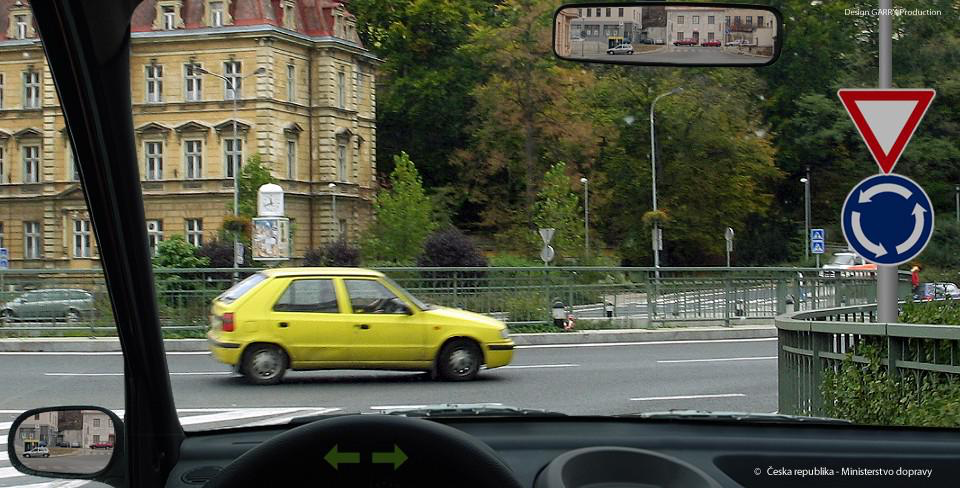
Question 1 of 5
Beyond the depicted pair of traffic signs:
-
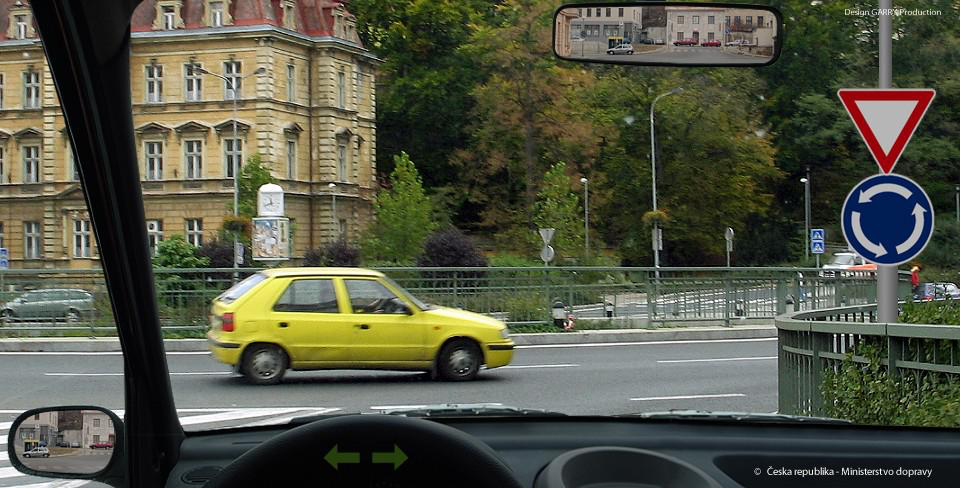
Question 2 of 5
The driver of the vehicle in the view:
-
Question 3 of 5
The driver of the vehicle from the viewpoint:
-
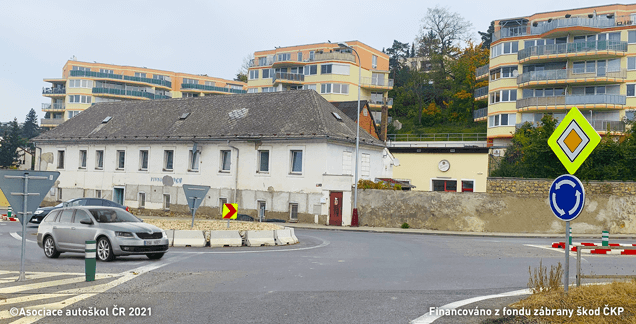
Question 4 of 5
The driver of the red vehicle on the roundabout:
-
Question 5 of 5
The driver of the vehicle from the viewpoint at the depicted roundabout: